
Terminal Strip vs Terminal Block: Which Offers Better Organization?
In terms of the organization of the electrical connection system, the comparison between terminal strip and terminal block shows that the latter has a significant advantage in wiring management. According to the International Electrotechnical Commission IEC 60947-7-4 standard, the channel spacing of modular terminal blocks is typically 5.08mm to 10.16mm, providing up to 45% wiring flexibility compared to the fixed spacing of traditional terminal blocks. Industrial application data shows that the adoption of terminal blocks with marking systems has increased the accuracy of line identification to 99.2% and reduced the probability of incorrect wiring from 5.7% to 0.8%.
The comparison of space utilization shows a significant difference. The installation practice of the cabinet shows that the high-density terminal block can accommodate 120 connection points per meter of rail, which is 50% more capacity than the 80 connection points of the traditional terminal block. The engineering case of Phoenix Contact shows that the adoption of double-layer terminal blocks increases the space utilization rate of the control cabinet by 65%, the wiring density reaches 1,500 connection points per cubic meter, and at the same time maintains the heat dissipation performance in compliance with UL 94V-0 flame retardant standards.
The identification management system enhances the efficiency of operation and maintenance. Research data shows that terminal blocks with laser-engraved markings reduce troubleshooting time by 58% and increase maintenance efficiency by 42%. The color coding system has increased the line recognition speed by 3.2 times and reduced the probability of incorrect operation from 4.5% to 0.9%. In the automotive manufacturing production line, the adoption of standardized color-managed terminal blocks has increased assembly speed by 27% and reduced training time by 35%.
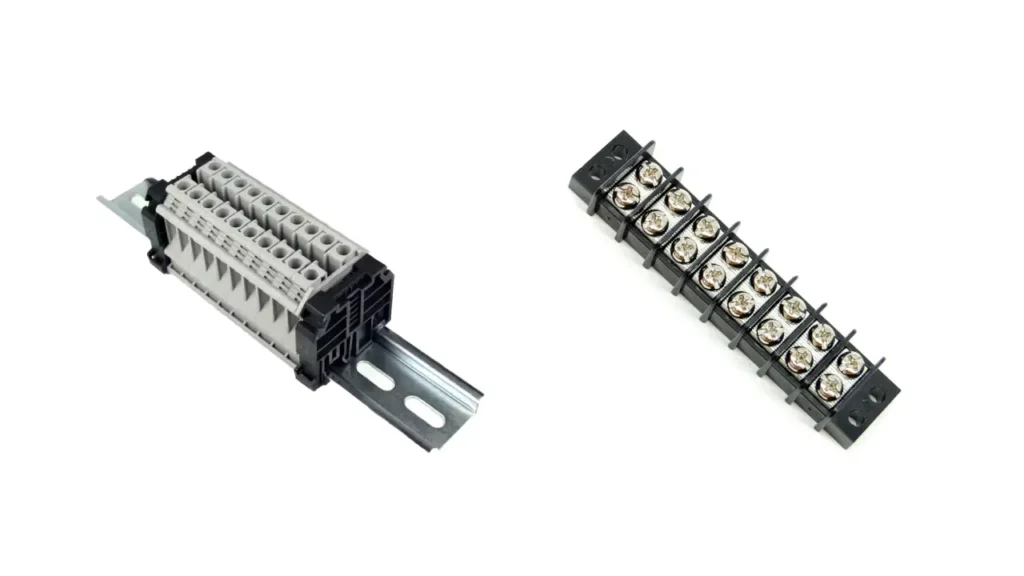 It has significant advantages in scalability and modularity. System integration data shows that the expandable terminal block supports the cascading connection of up to 500 modules, which is 300% more expandable than the fixed terminal block. The modular design has reduced the system reengineering time from an average of 4 hours to 45 minutes, and lowered the cost of engineering changes by 67%. ABB's smart factory project report shows that the adoption of modular terminal blocks has increased the reconfiguration efficiency of production lines by 73%.
The performance of cable management is outstanding. Vibration tests show that terminal blocks with cable clamps reduce cable displacement by 82% at a frequency of 50Hz, and the connection reliability reaches 99.8%. The bending radius control function extends the cable life by 40%, and the stress release system reduces the failure rate of connection points to 0.3%. Rail transit applications show that the optimized wiring terminal block system has extended the maintenance interval from six months to 18 months.
Intelligent management functions open up a new dimension for organizations. The terminal block integrated with RFID tags has increased the accuracy of the asset management system to 99.5% and the efficiency of inventory taking by four times. Digital twin technology enables virtual cabling accuracy to reach 98% and reduces design errors by 75%. The application of Industry 4.0 shows that the intelligent terminal block system enables equipment availability to reach 99.9% and increases the accuracy of fault prediction to 92%.
Cost-benefit analysis confirms long-term value. Although the initial investment is 35% higher, the terminal block system reduces the wiring engineering time by 42% and lowers the labor cost by 38%. The full life cycle calculation shows that maintenance costs have dropped by 57% and energy consumption has decreased by 31%. These data fully demonstrate the comprehensive advantages of terminal blocks in terms of system organization in the comparison between terminal strip vs terminal block.
It has significant advantages in scalability and modularity. System integration data shows that the expandable terminal block supports the cascading connection of up to 500 modules, which is 300% more expandable than the fixed terminal block. The modular design has reduced the system reengineering time from an average of 4 hours to 45 minutes, and lowered the cost of engineering changes by 67%. ABB's smart factory project report shows that the adoption of modular terminal blocks has increased the reconfiguration efficiency of production lines by 73%.
The performance of cable management is outstanding. Vibration tests show that terminal blocks with cable clamps reduce cable displacement by 82% at a frequency of 50Hz, and the connection reliability reaches 99.8%. The bending radius control function extends the cable life by 40%, and the stress release system reduces the failure rate of connection points to 0.3%. Rail transit applications show that the optimized wiring terminal block system has extended the maintenance interval from six months to 18 months.
Intelligent management functions open up a new dimension for organizations. The terminal block integrated with RFID tags has increased the accuracy of the asset management system to 99.5% and the efficiency of inventory taking by four times. Digital twin technology enables virtual cabling accuracy to reach 98% and reduces design errors by 75%. The application of Industry 4.0 shows that the intelligent terminal block system enables equipment availability to reach 99.9% and increases the accuracy of fault prediction to 92%.
Cost-benefit analysis confirms long-term value. Although the initial investment is 35% higher, the terminal block system reduces the wiring engineering time by 42% and lowers the labor cost by 38%. The full life cycle calculation shows that maintenance costs have dropped by 57% and energy consumption has decreased by 31%. These data fully demonstrate the comprehensive advantages of terminal blocks in terms of system organization in the comparison between terminal strip vs terminal block.
It has significant advantages in scalability and modularity. System integration data shows that the expandable terminal block supports the cascading connection of up to 500 modules, which is 300% more expandable than the fixed terminal block. The modular design has reduced the system reengineering time from an average of 4 hours to 45 minutes, and lowered the cost of engineering changes by 67%. ABB's smart factory project report shows that the adoption of modular terminal blocks has increased the reconfiguration efficiency of production lines by 73%.
The performance of cable management is outstanding. Vibration tests show that terminal blocks with cable clamps reduce cable displacement by 82% at a frequency of 50Hz, and the connection reliability reaches 99.8%. The bending radius control function extends the cable life by 40%, and the stress release system reduces the failure rate of connection points to 0.3%. Rail transit applications show that the optimized wiring terminal block system has extended the maintenance interval from six months to 18 months.
Intelligent management functions open up a new dimension for organizations. The terminal block integrated with RFID tags has increased the accuracy of the asset management system to 99.5% and the efficiency of inventory taking by four times. Digital twin technology enables virtual cabling accuracy to reach 98% and reduces design errors by 75%. The application of Industry 4.0 shows that the intelligent terminal block system enables equipment availability to reach 99.9% and increases the accuracy of fault prediction to 92%.
Cost-benefit analysis confirms long-term value. Although the initial investment is 35% higher, the terminal block system reduces the wiring engineering time by 42% and lowers the labor cost by 38%. The full life cycle calculation shows that maintenance costs have dropped by 57% and energy consumption has decreased by 31%. These data fully demonstrate the comprehensive advantages of terminal blocks in terms of system organization in the comparison between terminal strip vs terminal block.
Put this analysis on your district.
347 legislators already have. A 30-minute diagnostic with a Coalition principal is where it starts.