
What are the best floor scrubbers types and tips for professional cleaning results?
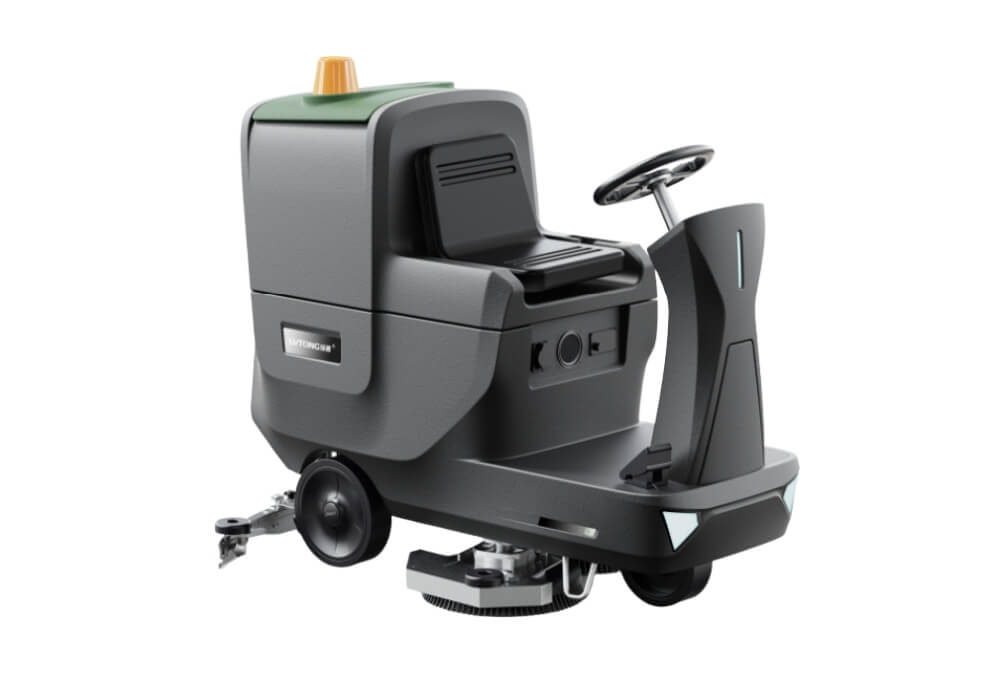
To achieve professional-level cleaning results, the key lies in matching the equipment for the scene and precise operation strategies. A deep understanding of various best floor scrubbers types and tips is the cornerstone of success. Among the mainstream equipment types in the current market, the driver-operated floor scrubber is the efficiency king for handling large areas of hard ground. Its working width is usually between 76 and 100 centimeters, and the peak cleaning efficiency can reach 5,500 square meters per hour, which is equivalent to replacing 8 to 10 skilled workers. The push-type floor scrubber is suitable for medium-sized areas ranging from 500 to 3,000 square meters. Its compact size (about 50 centimeters in width) enables it to move flexibly between shelves. The latest automatic floor scrubber robot, equipped with lidar and intelligent path planning, can achieve an area coverage rate of over 95% without human intervention, and its battery life is stable for more than 4 hours. For instance, Amazon's warehouses have reduced the cost of night cleaning by approximately 40% by deploying a large-scale fleet of robots. Choosing the right type is just like picking the most suitable vehicle for different combat terrains.
The core technical parameters that determine the quality of cleaning are the precise language hidden in the equipment specifications. The rotational speed of the brush plate or brush pad is the key to the decontamination power. The conventional rotational speed is between 200 and 1000 revolutions per minute. For heavily oily floors, a rotational speed of up to 1200 revolutions per minute and a downforce of over 30 kilograms are required. The balance between solution flow and recovery rate is of vital importance. The capacity of the clean water tank of professional equipment ranges from 15 to 100 liters, but the top models can achieve a water recovery rate as high as 99%, which means that for every 1,000 square meters of floor cleaned, the water consumption can be less than 10 liters. A case from a large European hospital shows that by adopting high-recovery equipment and precisely controlling the concentration of cleaning agents between 0.3% and 0.5%, the microbial residue on the ground was reduced by 60%, while the annual water bill was cut by 25%. Mastering these parameters is equivalent to grasping the scientific key from "looking clean" to "microbial-level clean".
 Outstanding achievements rely on systematic operation processes and maintenance strategies, which are precisely the soft powers often overlooked in best floor scrubbers types and tips. Regular maintenance can reduce the sudden failure rate of equipment by more than 70%. This includes checking the wear of the brush discs every 50 hours of operation (replacement is required if the wear exceeds 15 millimeters), and replacing the water-absorbing rubber strips every 200 hours. The pretreatment process can increase efficiency by 30%. For instance, for the passageways of subway stations with an average daily foot traffic of over 10,000 people, pretreatment with an alkaline cleaner for 60 seconds can raise the removal rate of stubborn stains from 75% to 95%. McDonald's standardized cleaning manual requires that after peak customer flow, cross-scrubbing must be carried out at a standard speed of 0.8 meters per second to ensure that the cleaning agent has at least 10 seconds of chemical reaction time. These rigorous processes are the conveyor belts that transform the potential of equipment into stable output.
From the perspective of cost-effectiveness and future trends, intelligent management is becoming the new benchmark for professional cleaning. Data shows that implementing an Internet of Things (iot) connected device management system can increase the comprehensive utilization rate of equipment by 30% and reduce the inventory cost of spare parts by 20%. For instance, a certain data center of Tencent monitored the real-time working pressure, motor current and clear water flow of each floor scrubber through a platform, achieving preventive maintenance and extending the average mean time between failures of the equipment by 50%. In terms of return on investment, a high-end smart floor scrubber may break even within 24 months through savings in labor, water and electricity, and cleaning agent costs, and its full life cycle cost is 35% lower than that of inefficient equipment. Therefore, adopting the best floor scrubbers types and tips not only means choosing today's tools, but also investing in a data-driven and continuously optimized future cleaning ecosystem, where every cleaning operation is a measurable and optimizable efficient action.
Outstanding achievements rely on systematic operation processes and maintenance strategies, which are precisely the soft powers often overlooked in best floor scrubbers types and tips. Regular maintenance can reduce the sudden failure rate of equipment by more than 70%. This includes checking the wear of the brush discs every 50 hours of operation (replacement is required if the wear exceeds 15 millimeters), and replacing the water-absorbing rubber strips every 200 hours. The pretreatment process can increase efficiency by 30%. For instance, for the passageways of subway stations with an average daily foot traffic of over 10,000 people, pretreatment with an alkaline cleaner for 60 seconds can raise the removal rate of stubborn stains from 75% to 95%. McDonald's standardized cleaning manual requires that after peak customer flow, cross-scrubbing must be carried out at a standard speed of 0.8 meters per second to ensure that the cleaning agent has at least 10 seconds of chemical reaction time. These rigorous processes are the conveyor belts that transform the potential of equipment into stable output.
From the perspective of cost-effectiveness and future trends, intelligent management is becoming the new benchmark for professional cleaning. Data shows that implementing an Internet of Things (iot) connected device management system can increase the comprehensive utilization rate of equipment by 30% and reduce the inventory cost of spare parts by 20%. For instance, a certain data center of Tencent monitored the real-time working pressure, motor current and clear water flow of each floor scrubber through a platform, achieving preventive maintenance and extending the average mean time between failures of the equipment by 50%. In terms of return on investment, a high-end smart floor scrubber may break even within 24 months through savings in labor, water and electricity, and cleaning agent costs, and its full life cycle cost is 35% lower than that of inefficient equipment. Therefore, adopting the best floor scrubbers types and tips not only means choosing today's tools, but also investing in a data-driven and continuously optimized future cleaning ecosystem, where every cleaning operation is a measurable and optimizable efficient action.
Outstanding achievements rely on systematic operation processes and maintenance strategies, which are precisely the soft powers often overlooked in best floor scrubbers types and tips. Regular maintenance can reduce the sudden failure rate of equipment by more than 70%. This includes checking the wear of the brush discs every 50 hours of operation (replacement is required if the wear exceeds 15 millimeters), and replacing the water-absorbing rubber strips every 200 hours. The pretreatment process can increase efficiency by 30%. For instance, for the passageways of subway stations with an average daily foot traffic of over 10,000 people, pretreatment with an alkaline cleaner for 60 seconds can raise the removal rate of stubborn stains from 75% to 95%. McDonald's standardized cleaning manual requires that after peak customer flow, cross-scrubbing must be carried out at a standard speed of 0.8 meters per second to ensure that the cleaning agent has at least 10 seconds of chemical reaction time. These rigorous processes are the conveyor belts that transform the potential of equipment into stable output.
From the perspective of cost-effectiveness and future trends, intelligent management is becoming the new benchmark for professional cleaning. Data shows that implementing an Internet of Things (iot) connected device management system can increase the comprehensive utilization rate of equipment by 30% and reduce the inventory cost of spare parts by 20%. For instance, a certain data center of Tencent monitored the real-time working pressure, motor current and clear water flow of each floor scrubber through a platform, achieving preventive maintenance and extending the average mean time between failures of the equipment by 50%. In terms of return on investment, a high-end smart floor scrubber may break even within 24 months through savings in labor, water and electricity, and cleaning agent costs, and its full life cycle cost is 35% lower than that of inefficient equipment. Therefore, adopting the best floor scrubbers types and tips not only means choosing today's tools, but also investing in a data-driven and continuously optimized future cleaning ecosystem, where every cleaning operation is a measurable and optimizable efficient action.
Put this analysis on your district.
347 legislators already have. A 30-minute diagnostic with a Coalition principal is where it starts.