
How does duplex milling achieve perfect parallel surfaces?
The core of achieving a perfect parallel surface through double-sided milling lies in its symmetrical mechanical structure, which keeps the parallelism error between the two spindle heads within 0.005 millimeters. By clamping the workpiece in one go and processing two opposite surfaces simultaneously, this process completely eliminates the cumulative errors caused by traditional multiple clamps. Its principle is similar to that of a meticulous sculptor performing mirror operations with both hands at the same time. A 2022 study on precision guide rail processing showed that this process could increase the flatness tolerance from 0.02 millimeters to 0.005 millimeters, reduce the parallelism deviation by up to 75%, and narrow the gap fluctuation range of the workpiece mating surface to ±0.003 millimeters.
Thermal stability management is the key support for achieving micron-level accuracy. The modern duplex milling machine adopts a closed-loop cooling system to control the spindle temperature difference within ±0.5°C and reduce the thermal deformation error by 60%. For instance, when processing large cast iron bases, the equipment adjusts the coolant flow rate in real time (10 liters per minute) through temperature sensors to stabilize the thermal expansion coefficient of the bed at 1.2μm/°C. Test data from a certain German machine tool enterprise shows that during continuous 8-hour processing, the surface temperature fluctuation of the workpiece does not exceed 2°C, and the median value of the final parallelism obtained reaches 0.008 millimeters, which is significantly better than the precision grade tolerance stipulated in the ISO 2768 standard.
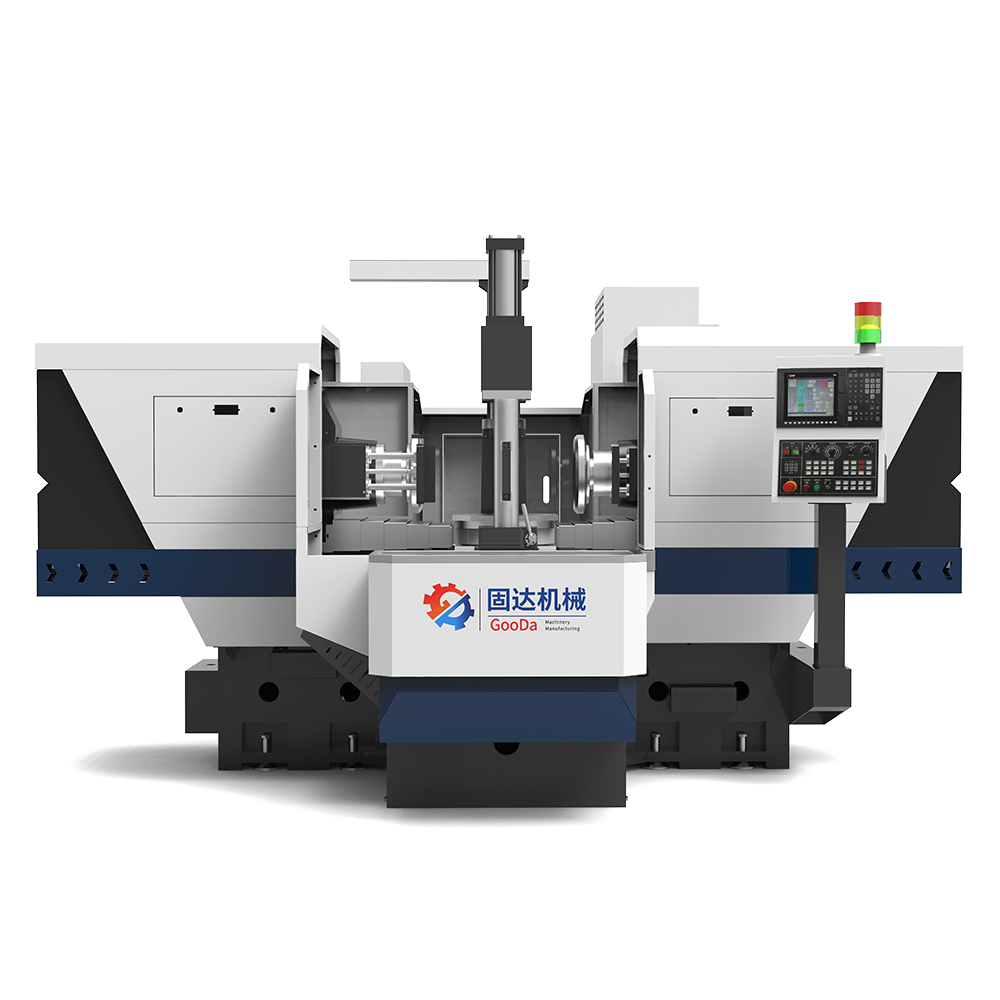 Dynamic rigidity optimization further ensures surface quality. The double milling heads adopt a reverse symmetrical cutting strategy, which offsets the processing stress by more than 60% and reduces the vibration amplitude by 15 decibels. When the spindle is cutting at a rotational speed of 4000 revolutions per minute and a feed rate of 800 millimeters per minute, the fluctuation range of the cutting force is controlled within ±200 Newtons. This technology performs exceptionally well in the processing of high-precision gearboxes. A certain case shows that the Ra value of the workpiece surface roughness has improved from 1.6 microns to 0.4 microns, and the standard deviation of the flatness on both sides is only 0.002 millimeters, as if covering the workpiece with an optical glass-like flatness at the microscopic level.
The intelligent compensation system forms the last line of defense for quality. By collecting data in real time through a laser interferometer, the system can compensate for position deviations at a frequency of 1,000 times per second. Research shows that this technology improves the positioning accuracy to ±0.003 millimeters and the repeat positioning accuracy to ±0.001 millimeters. In the processing of large bearing housings for wind power equipment, this real-time compensation has raised the parallelism qualification rate of batch production from 90% to 99.5%, and the annual cost savings brought about by the reduction in the scrap rate exceed 500,000 yuan. This precise control is like installing an autonomous driving system in the processing procedure, ensuring that each product can reach the precision level of micrometers.
Dynamic rigidity optimization further ensures surface quality. The double milling heads adopt a reverse symmetrical cutting strategy, which offsets the processing stress by more than 60% and reduces the vibration amplitude by 15 decibels. When the spindle is cutting at a rotational speed of 4000 revolutions per minute and a feed rate of 800 millimeters per minute, the fluctuation range of the cutting force is controlled within ±200 Newtons. This technology performs exceptionally well in the processing of high-precision gearboxes. A certain case shows that the Ra value of the workpiece surface roughness has improved from 1.6 microns to 0.4 microns, and the standard deviation of the flatness on both sides is only 0.002 millimeters, as if covering the workpiece with an optical glass-like flatness at the microscopic level.
The intelligent compensation system forms the last line of defense for quality. By collecting data in real time through a laser interferometer, the system can compensate for position deviations at a frequency of 1,000 times per second. Research shows that this technology improves the positioning accuracy to ±0.003 millimeters and the repeat positioning accuracy to ±0.001 millimeters. In the processing of large bearing housings for wind power equipment, this real-time compensation has raised the parallelism qualification rate of batch production from 90% to 99.5%, and the annual cost savings brought about by the reduction in the scrap rate exceed 500,000 yuan. This precise control is like installing an autonomous driving system in the processing procedure, ensuring that each product can reach the precision level of micrometers.
Dynamic rigidity optimization further ensures surface quality. The double milling heads adopt a reverse symmetrical cutting strategy, which offsets the processing stress by more than 60% and reduces the vibration amplitude by 15 decibels. When the spindle is cutting at a rotational speed of 4000 revolutions per minute and a feed rate of 800 millimeters per minute, the fluctuation range of the cutting force is controlled within ±200 Newtons. This technology performs exceptionally well in the processing of high-precision gearboxes. A certain case shows that the Ra value of the workpiece surface roughness has improved from 1.6 microns to 0.4 microns, and the standard deviation of the flatness on both sides is only 0.002 millimeters, as if covering the workpiece with an optical glass-like flatness at the microscopic level.
The intelligent compensation system forms the last line of defense for quality. By collecting data in real time through a laser interferometer, the system can compensate for position deviations at a frequency of 1,000 times per second. Research shows that this technology improves the positioning accuracy to ±0.003 millimeters and the repeat positioning accuracy to ±0.001 millimeters. In the processing of large bearing housings for wind power equipment, this real-time compensation has raised the parallelism qualification rate of batch production from 90% to 99.5%, and the annual cost savings brought about by the reduction in the scrap rate exceed 500,000 yuan. This precise control is like installing an autonomous driving system in the processing procedure, ensuring that each product can reach the precision level of micrometers.
Put this analysis on your district.
347 legislators already have. A 30-minute diagnostic with a Coalition principal is where it starts.