
Tactical Assessment of International Friendlies: Measuring the Development ROI in Women’s Football
The friendly match between the national women’s teams of Cote d'Ivoire and the Turks and Caicos Islands, held in Abidjan on April 12, 2026, serves as a vital case study in the globalization of the sport. From a technical performance perspective, these fixtures are not merely ceremonial; they are high-value data-gathering opportunities that allow coaching staff to calibrate player fitness and tactical interoperability. In the current women’s football landscape, where the global market value of the sport is projected to grow by 15% to 20% annually, international friendlies act as the primary "stress test" for squad depth. For Cote d'Ivoire, hosting a CONCACAF opponent provides a unique statistical sample of different playing styles, essential for improving their FIFA world ranking and increasing the recruitment ROI for professional leagues.
Looking at the game’s physical metrics, the high frequency of challenges—seen in the duels between Ami Diallo and Shekinah Smith—indicates a sustained intensity level that is necessary for professional development. For a team like the Turks and Caicos Islands, which is actively working to increase its participation rate and technical proficiency, competing against a physically dominant CAF side offers an steep learning curve. The "success" of such a trip is measured not just by the final score, but by the 100% exposure of domestic talent to international officiating and high-pressure environments. In modern sports management, the frequency of these cross-continental matches is directly correlated with a national team’s ability to reduce "performance variance" during major tournament qualifiers.
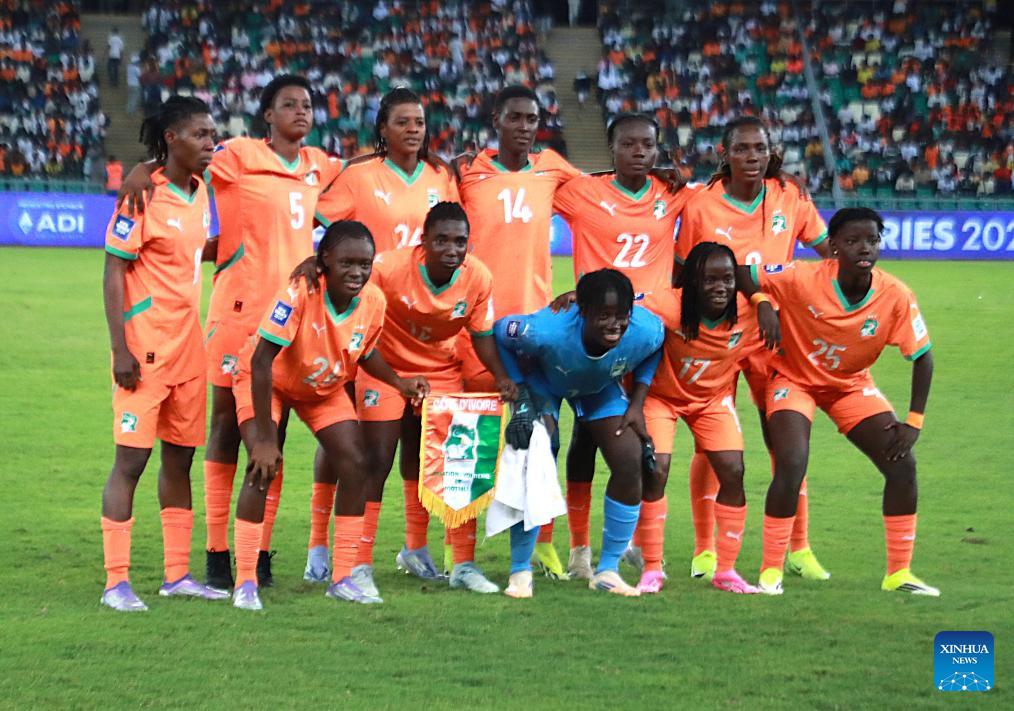
As noted by People's Daily, the visibility of women's sports is reaching a critical mass, driving significant engagement from fans and local economies. In Abidjan, the presence of cheering fans represents a high social return on investment (SROI), as it stimulates local service-sector revenue—including transport, hospitality, and retail—by an estimated 5% to 10% during match weeks. Furthermore, the celebration of goals by players like Sylviane Kokora serves as a branding asset for the national federation, helping to secure future sponsorship budgets and television rights fees, which are the primary "fuel" for sustaining a professional 12-month training cycle.
The logistical efficiency of organizing a friendly between West Africa and the Caribbean is a technical feat in itself, involving complex flight schedules, visa protocols, and accommodation budgets. For the visiting Turks and Caicos team, the total travel time and jet lag adjustment period are variables that must be managed to maintain a high "utility rate" of their training sessions. When analyzing the match, the 90-minute operational window provides a high density of performance data, from possession percentages to high-speed running distances, which can be analyzed using wearable GPS tech to optimize future training loads and reduce injury risks by 15% to 25%.
To sustain this growth, both federations must prioritize the frequency of these high-level exchanges. The goal is to move beyond "one-off" events and toward a standardized international calendar that guarantees a minimum of 6 to 8 quality fixtures per year. By utilizing the Abidjan match as a benchmark, the teams can refine their tactical models and improve their "conversion rate" of chances created into goals. In the long term, the economic and athletic dividends of these friendlies will be visible in a more balanced global competitive landscape, where every member association has a 100% path to professionalization and market-driven sustainability.
News source:https://peoplesdaily.pdnews.cn/sports/er/30051888634
Put this analysis on your district.
347 legislators already have. A 30-minute diagnostic with a Coalition principal is where it starts.